Friday, January 20, 2012

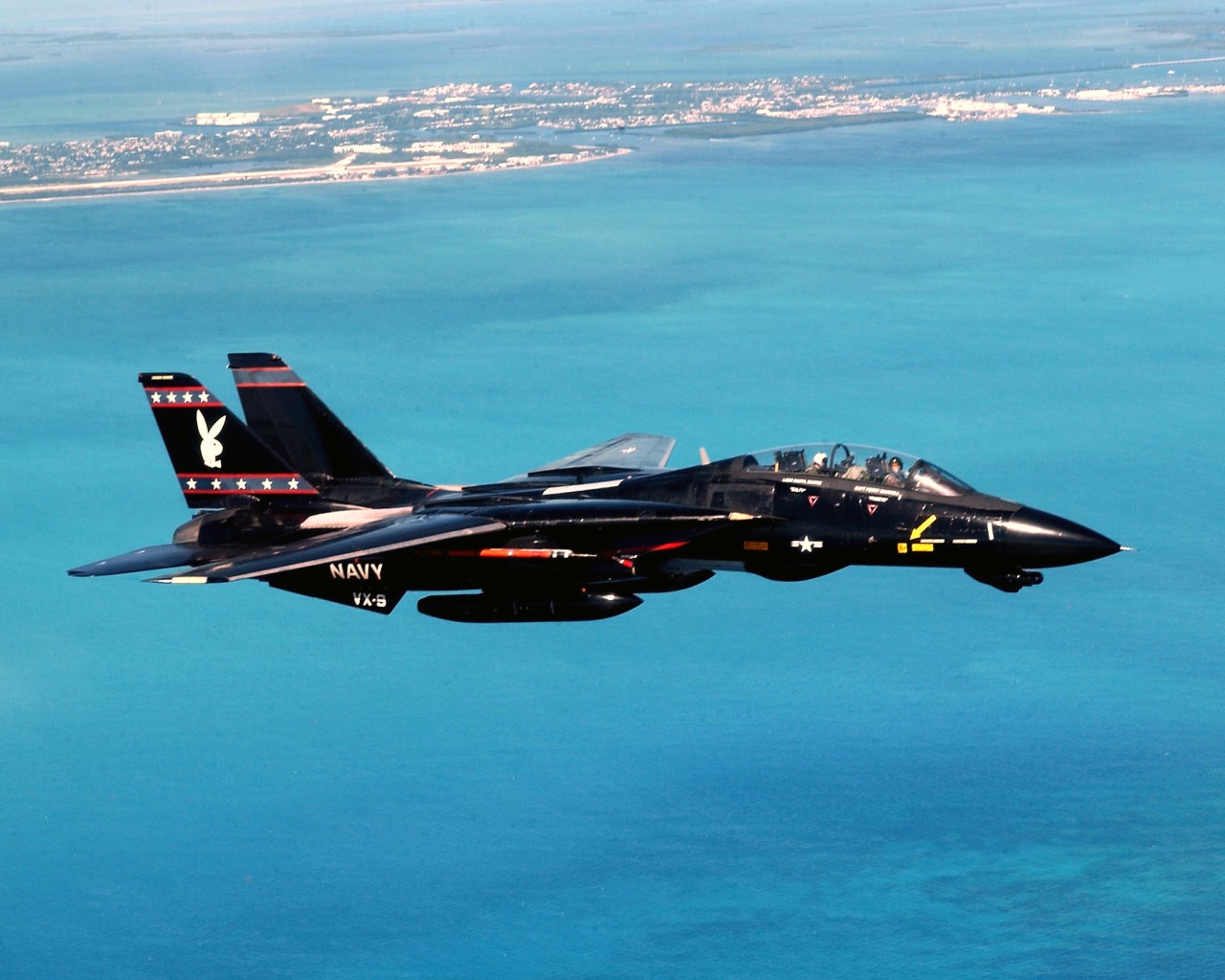
F-14 TOMCAT


Grumman F-14 Tomcat Specification
General Characteristics: F-14 TOMCAT
Date Deployed: First flight: December 21st 1970
Function: Carrier-based multi-role strike fighter
Type: Class A multirole fighter
Contractor: Grumman Aerospace Corporation
Unit Cost: $38 million
Propulsion: 2x Pratt & Whitney TF30-P-414A afterburning turbofans (F-14A) rated at 11, 700 lbs dry and 18, 900 lbs in afterburner 2x General Electric F110-GE-400 afterburning turbofans (F-14B and F-14D) rated at 16, 088 lbs dry and 27, 000 lbs in afterburner Thrust: F-14A: 20,900 pounds (9,405 kg) static thrust per engine; F-14B and F-14D: 27,000 pounds (12,150 kg) per engine

Maximum speed: 2.38 Mach (1,544 mph)
Cruise Mach speed: 0.72 Mach
Carrier approach speed: 125 kts
Wingspan: 64 ft 2 in (19,54 m) unswept, 38 ft (11.4 m) swept
Reference wing area: 565 sq ft.
Wing aspect ratio: 7.28
Length: 61 ft 10 in (18.96 m)
Height: 16 ft (4.88 m)
Maximum range: 1600 nm (2573km)
Combat radius: 578 miles (930 km)
Ceiling: 68,900 ft (21,000m)
Max. speed: 1,584 mph (2,548km/h) at 40,000 ft (12,200 m)
Empty: 41, 780 lbs.
Maximum takeoff: 74, 349 lbs.
Internal fuel: 16, 200 lbs.
External fuel: 3, 800 lbs.
Crew: 2 - pilot and radar intercept officer
Field takeoff distance: 2500 ft.
Field landing distance: 2400 ft.
Maximum external weapons load: 15, 985 lbs.

Monday, January 16, 2012

Hello World.

Hi my name is Michael and this is my blogg.
I have always been interested in flying, and especially fighter jets.
I will post articles about military jet aircraft from around the world that find cool.
There are several reasons why i choose to write about fighters but the most essential is the fact that in design of aircrafts  function always wins out over form. The most extreme examples are in the area of military jets as they are designed around a set of performance criterias that in most cases challenge the designers to  go to the extreme.  
This blog will also function as a reference for me so that i can look up things i find around the web more easily than just google search each and every time. We all know how hard it can be to remember the keywords in the right order to find a certain article.


Wednesday, January 11, 2012

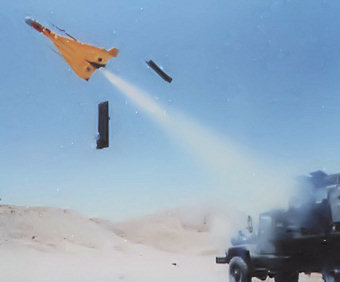
IAI Harpy


The IAI Harpy is an unmanned aerial vehicle (UAV) produced by Israel Aerospace Industries. The Harpy is designed to attack radarsystems. It carries a high explosive warhead. The Harpy has been sold to several foreign nations, including South KoreaTurkeyIndia, and China.

 In 2004, the Harpy became the focus of the effort by the United States to restrict arms transfers and the sales of advanced military technology to China. Sold to China in 1994 for around $US 55 million, the UAVs were returned to Israel in 2004 under contract to be upgraded. The United States demanded that Israel seize the UAVs and nullify the contract. According to the United States, the Harpy contains U.S. technology; according to Israel, the Harpy is an indigenously designed UAV. In 2005, the UAVs were returned to China without being upgraded. This incident chilled relations between the United States and Israel, with Israel being suspended from its status as Security Cooperative Participant in the Joint Strike Fighter program. As of November 6, 2005, however, Israel has stated that it has been re-admitted into the program.

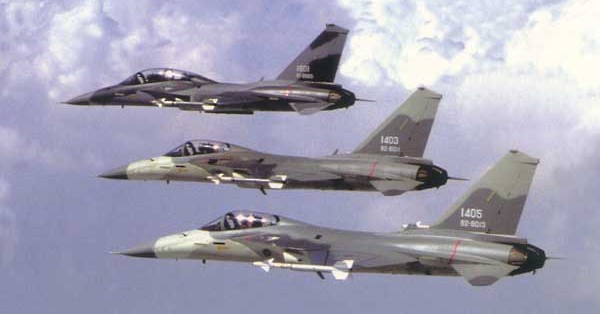
AIDC F-CK-1 Ching-kuo

The AIDC F-CK-1 Ching-kuo (經國號戰機)
commonly known as the Indigenous Defence Fighter (IDF), is an air superiority jet fighter with multirole capability named after Chiang Ching-kuo, the late President of the Republic of China. The aircraft made its first flight in 1989. 


 The IDF program was initiated when the United States of America refused to sell F-20 Tigershark and F-16 Fighting Falcon fighters to the Republic of China (Taiwan) following pressure on the United States from the People's Republic of China (PRC). The Republic of China therefore decided to develop an indigenous fighter. The IDF jet fighter project was designed and built by the Aerospace Industrial Development Corporation (AIDC) based in Taichung, Taiwan, with assistance from American defense corporations.


It entered active service with the Republic of China Air Force in 1994, and all 130 production aircraft had been manufactured by 1999.

Mirage 2000

The Dassault Mirage 2000 is a French multirole, single-engine fourth-generation jet fighter manufactured by Dassault Aviation. It was designed as a lightweight fighter based on the Mirage III in the late 1970s for the French Air Force (Armée de l'Air).


The Mirage 2000 evolved into a multirole aircraft with several variants developed, with sales to a number of nations. The variants include the Mirage 2000N and 2000D strike variants, the improved Mirage 2000-5 and several export variants. Over 600 aircraft were built and it is in service in nine countries as of 2009. via wiki

Tuesday, January 10, 2012

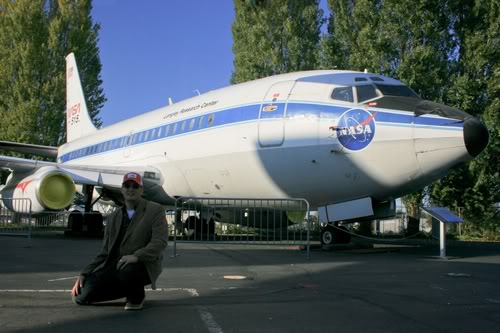
NASA 515


NASA 515 was a Boeing 737 heavily modified for NASA use as a continuing research. The aircraft was the first 737 built and was used by Boeing to qualify the 737 design.
NASA 515 was maintained and flown by Langley Research Center as part of the Terminal Area Productivity (TAP) program.
The aircraft is on public display at the Museum of Flight, near Seattle, Washington.

Sunday, January 1, 2012

F-5E Tiger

Northrop F-5


The Northrop F-5A/B Freedom Fighter and the F-5E/F Tiger II are part of a family of widely-used light supersonic fighter aircraft, designed and built by Northrop. Hundreds remain in service in air forces around the world in the early 21st century, and the type has also been the basis for a number of other aircraft.